
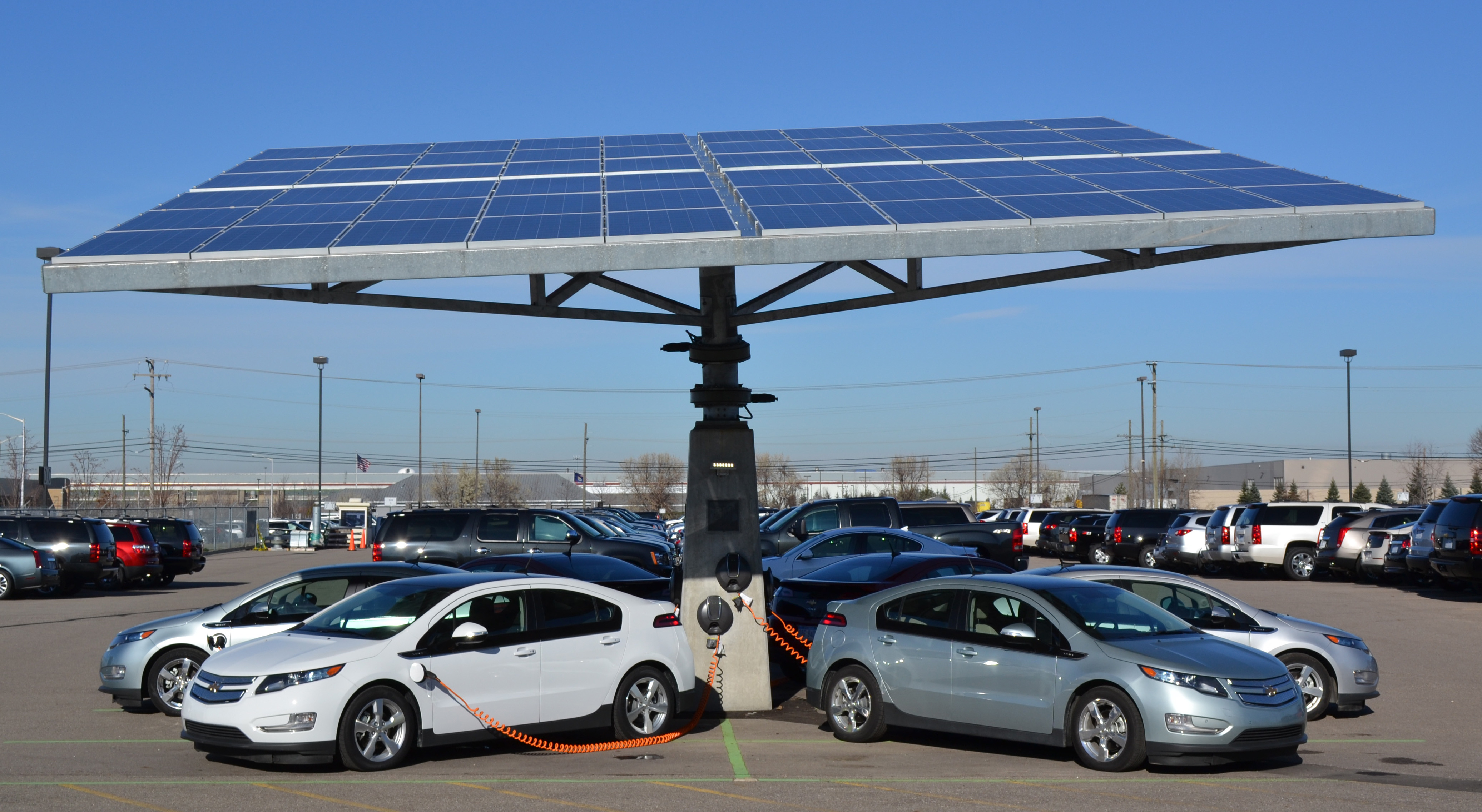
Dat fossiele brandstoffen op lange termijn een doodlopend straatje zijn is duidelijk, maar wat is nu het efficiëntste alternatief voor groene mobiliteit. Een onderzoek door de ‘University of California’ en de ‘Norwegian University of Science and Technology’ onderzocht de verschillende zogenaamde ‘sun-to-wheels’ alternatieven. ‘Sun-to-wheels’ is een verzamelnaam voor drie grote clusters: Zonne-energie, Biobrandstof of electrische energie gegeneerd door biomassa.
Vijf verschillende mogelijkheden werden bekeken
- Biobrandstof op basis van vingergras/switchgrass
- Biobrandstof op basis van maïs
- Elektriciteit op basis van vingergras/switchgrass
- Elektriciteit op basis van mais
- Energie via photo-voltaïsche cellen (zonne-energie)
Drie verschillende indicatoren (Vereiste m², Totale uitstoot CO² en de vereiste hoeveelheid energie) werden grondig onderzocht en uitgerekend per 100 gereden kilometers. Zonne-energie kwam duidelijk als winnaar uit de bus wanneer we spreken over nodige landmassa en dit tot 29x minder land dan het efficiëntste alternatief (biobrandstof van switchgrass). Ook op de andere indicatoren scoorde zonne-energie uitstekend.
De conclusie van het rapport is dan ook vrij duidelijk:
Assuming that the economics of PV and BEV technology will further improve and issues of material availability, and electricity transmission and storage can be resolved, PV offers land-efficient and low-carbon sun-to-wheels transportation. Unlike fuel crops, PV electricity does not have to compete with food production and biodiversity for fertile land and could potentially replace all gasoline used in US transportation.

Niel Staes
Latest posts by Niel Staes (see all)
- Globale C02-uitstoot in vijf grafieken - 18 januari 2014
- Bike Share Boom - 11 december 2013
- Antwerpen brengt luchtkwaliteit in kaart met aardbeien - 4 december 2013
